By Will Bower
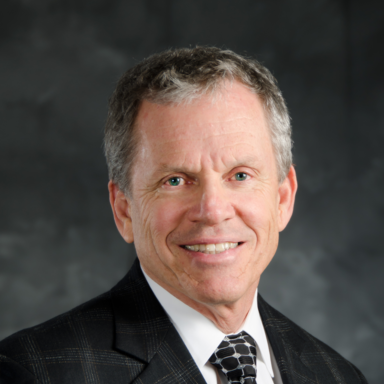
Chris Walker earned his doctorate from the Department of Communication Sciences and Disorders (CSD) in the College of Liberal Arts and Sciences in 1981. During his time at Iowa, he studied under distinguished faculty and has since gone on to lead an illustrious career in the field of communication sciences and disorders. He has also established a scholarship for doctoral students in CSD.
Learn more about Dr. Walker and how he’s given back in this Q&A. Responses have been lightly edited for structure and clarity.
What did your experience at the University of Iowa mean to you?
My experience as a doctoral student at the University of Iowa meant the world to me; it changed my life. With faculty like Kenneth Moll, James Curtis, Arnold Small, Hughlett Morris, and David Lilly, we had the best classes taught by nationally recognized faculty in our profession. The level of teaching was outstanding. In addition, we had many opportunities to work with the faculty in their labs. Curtis, my academic advisor, supervised my pre-comprehensive research project, which was a great learning experience for me. In addition, Morris served as my dissertation advisor. His help with revising and editing my writing was outstanding. Being an editor for the Journal of Speech and Hearing Disorders, he was very skilled at writing up research for publication. I also had an opportunity during my study at Iowa to strengthen my clinical skills by registering for clinical practicum in Voice, Stuttering, and Neuropathology.
Where has your career taken you since graduating from the University of Iowa?
After graduating from Iowa with a PhD, I was hired for a faculty position at the University of Redlands in Southern California. I was a faculty member there for 34 years and served as chair for 17 years. In addition, when time allowed, I supervised University of Redlands clinicians in the Disabled Student Services Center at Mt. San Antonio Community College.
In addition to the scholarship, how have you given back since graduating?
I have worked very hard to do my best teaching and clinical supervision of University of Redlands students through the years so they would go out into the profession and assist patients with Speech and Hearing Disorders in the most research-based, professional way possible.
What motivated you to establish a scholarship in CSD?
I have established a scholarship for doctoral students in Communication Sciences and Disorders because of the outstanding financial support I received while I was a doctoral student at Iowa. We were able to register for classes at the "in-state" student tuition rate. In addition, we received excellent student support from the NIH research grants many of the CSD faculty had received. The in-state tuition reduction was paid by Iowa taxpayers, and I wanted to show the people of Iowa the gratitude I had for that support. After [my] first semester, I never worked outside the department again. I focused on teaching assignments, research assistantships, and clinical assistantships at the local VA hospital and other sites. In my opinion, in the time I studied at Iowa, it was the best doctoral level training program in the country.