By Samantha Wirth
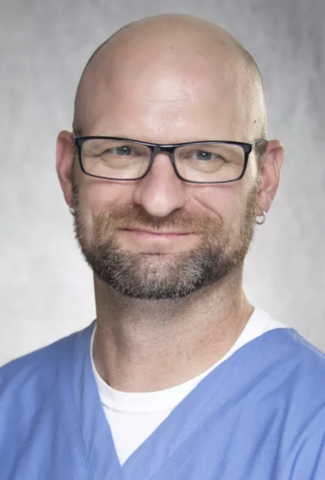
At the University of Iowa Speech, Language, and Hearing Clinic, Brian Peterson, SLPD, CCC-SLP works at the intersection of clinical care and education by supporting patients with swallowing disorders. In 2025, he joined the Department of Communication Sciences and Disorders (CSD) in the College of Liberal Arts and Sciences. Prior to starting at the clinic, Peterson spent over a decade as a practitioner at University of Iowa Health Care, where he treated adults with swallowing disorders related to a range of conditions, including strokes, traumatic brain injuries, encephalopathy, and lung transplants.
Peterson's experience spans both inpatient and outpatient settings. He has served the head and neck cancer population for both pre- and post-surgery visits, during and after their radiation and/or chemotherapy treatments, and before and after total laryngectomies. Head and neck cancer later became his primary area of focus.
Enhancing quality of life through modern treatment approaches
Dysphagia, or difficulty swallowing, can have significant impacts on a person’s quality of life. At the clinic, Peterson treats swallowing patients and supervises graduate clinicians. Peterson completes clinical swallowing evaluations on his patients, which help identify swallowing patterns and any concerns related to safety or efficiency. When needed, these evaluations are paired with instrumental swallow studies from outside clinics to form a treatment plan.
“Once we know the pathophysiology impacting the patient’s swallow function, we can offer recommendations for swallowing exercises, compensatory strategies, and/or maneuvers to improve and optimize their swallow function,” Peterson says.
As Iowa’s population continues to age, there is an increased need for dysphagia care and treatment.
“As adults live longer, they tend to have more medical events and/or chronic illnesses that can impact their ability to swallow,” Peterson says. “It’s important that clinicians understand how various health conditions can impact swallow function and how best to manage it.”
Emerging research in the field has changed the way clinicians treat their patients. Instead of modifying foods and liquids at the first sign of swallowing changes, clinicians are likely to instead provide exercise, compensatory strategies, and/or maneuver recommendations. These changes allow patients to maintain a less restrictive but still safe diet.
From vocal performance to clinical insight
In addition to his extensive clinical expertise, Peterson brings a unique background in vocal performance. Prior to pursuing his Speech Pathology Clinical Doctorate (SLPD), Peterson received a bachelor’s degree in choral music, an experience that continues to shape his scholarship and practice.
“[My vocal background] has provided a lot of experience listening to the nuances of voice quality and attempting to optimize it by providing cues such as breath control, vowel placement, and mouth shape,” Peterson said. “I also learned how to manipulate my own voice to achieve a certain sound and timbre, which allows me to imitate a patient’s sound to determine where the suboptimal vocal placement is occurring and how to modify it.”
Peterson’s ability to identify and model subtle vocal differences allows him to uniquely meet the needs of his patients. Additionally, he teaches students to listen critically and adapt their approaches to each patient. His performance background allows him to emphasize the importance of observation and problem-solving—skills that are useful in both clinical and academic settings.
Preparing the next generation of clinicians at CSD
After completing his master’s degree at the University of Iowa and teaching as an adjunct faculty member, Peterson was drawn to an opening in CSD that would allow him to return to instruction in a full-time role.
“The faculty are experts in the fields of speech pathology and audiology as a whole, and they are very approachable and collaborative,” he said. “There is an interest and commitment across the entire department to not only see our students graduate, but also to thrive and become future leaders in the field.”
Peterson finds it especially rewarding to see students begin applying what they’ve learned in clinical settings. As an instructor of the course Introduction to Speech and Hearing Process and Disorders, he engages with students early in their academic careers and continues to see their growth over time.
Looking ahead, Peterson is developing a head and neck cancer instrumentation course for graduate students, which will first be offered during the summer 2026 session. He also hopes to further develop CSD’s relationship with the UIHC speech-language pathology team to support patient care and collaborate on clinical best practices.
Through his work both in the clinic and in the classroom, Peterson is helping ensure that patients receive effective, individualized care while preparing future clinicians to meet the growing demands of their communities.