By Samantha Wirth
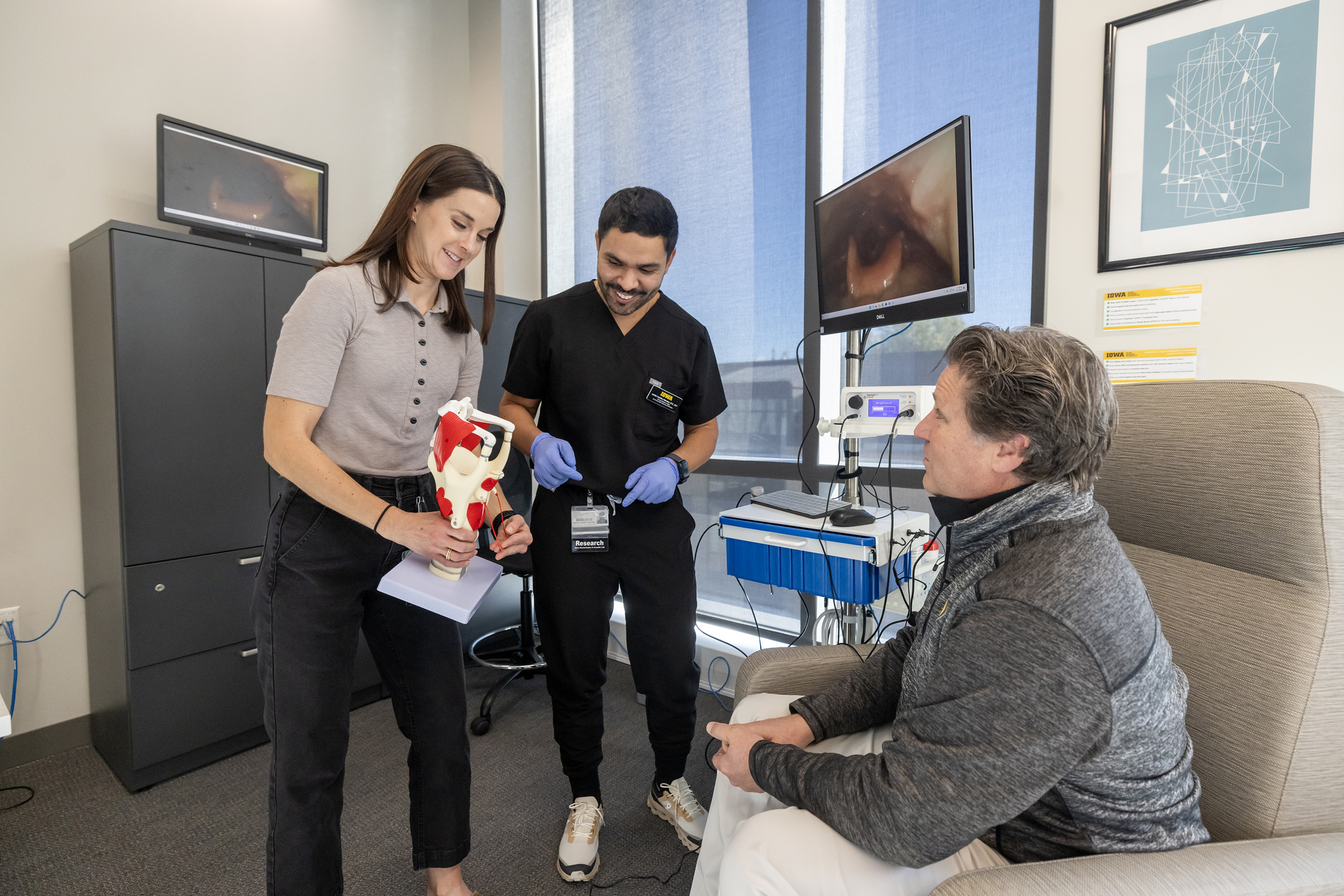
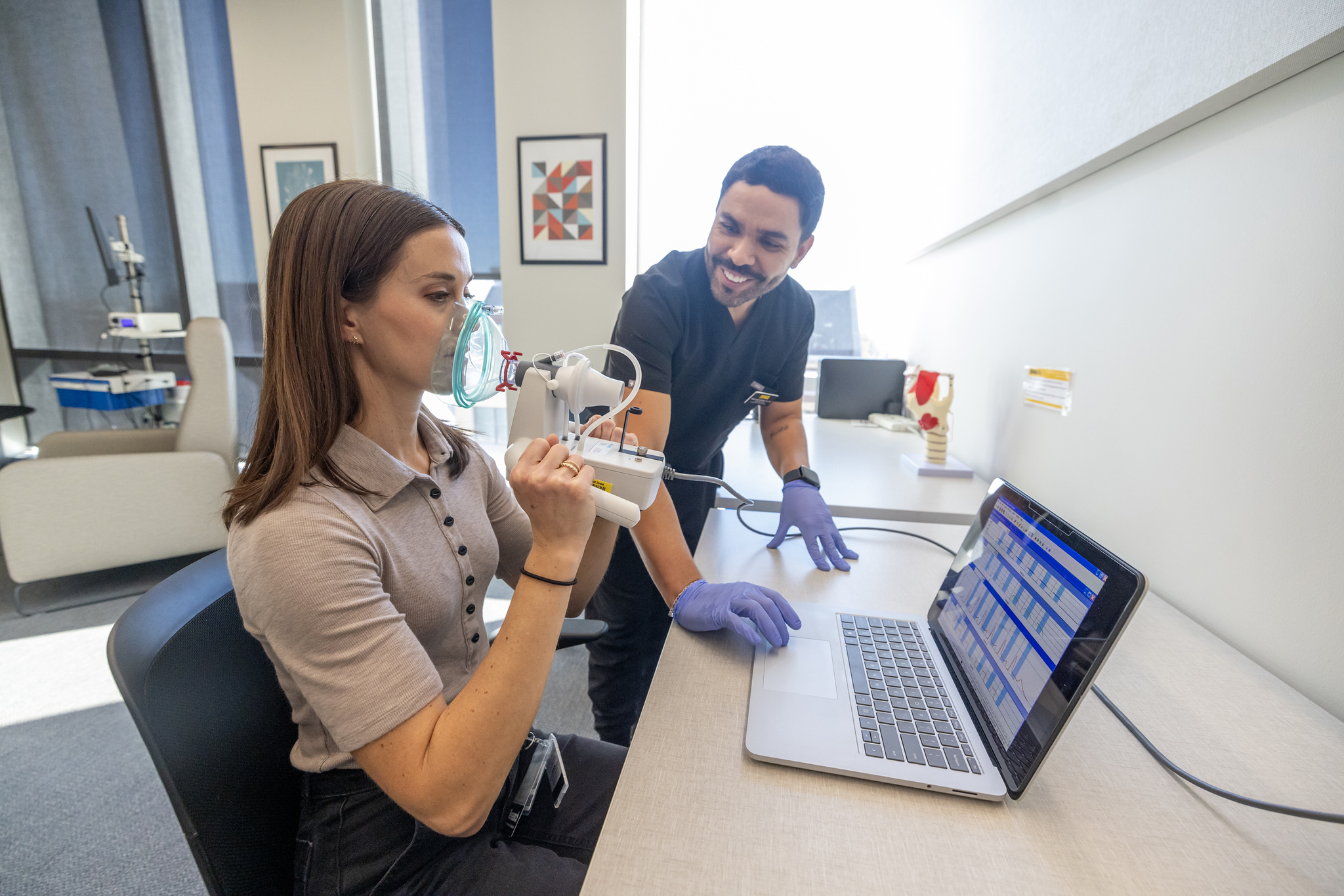
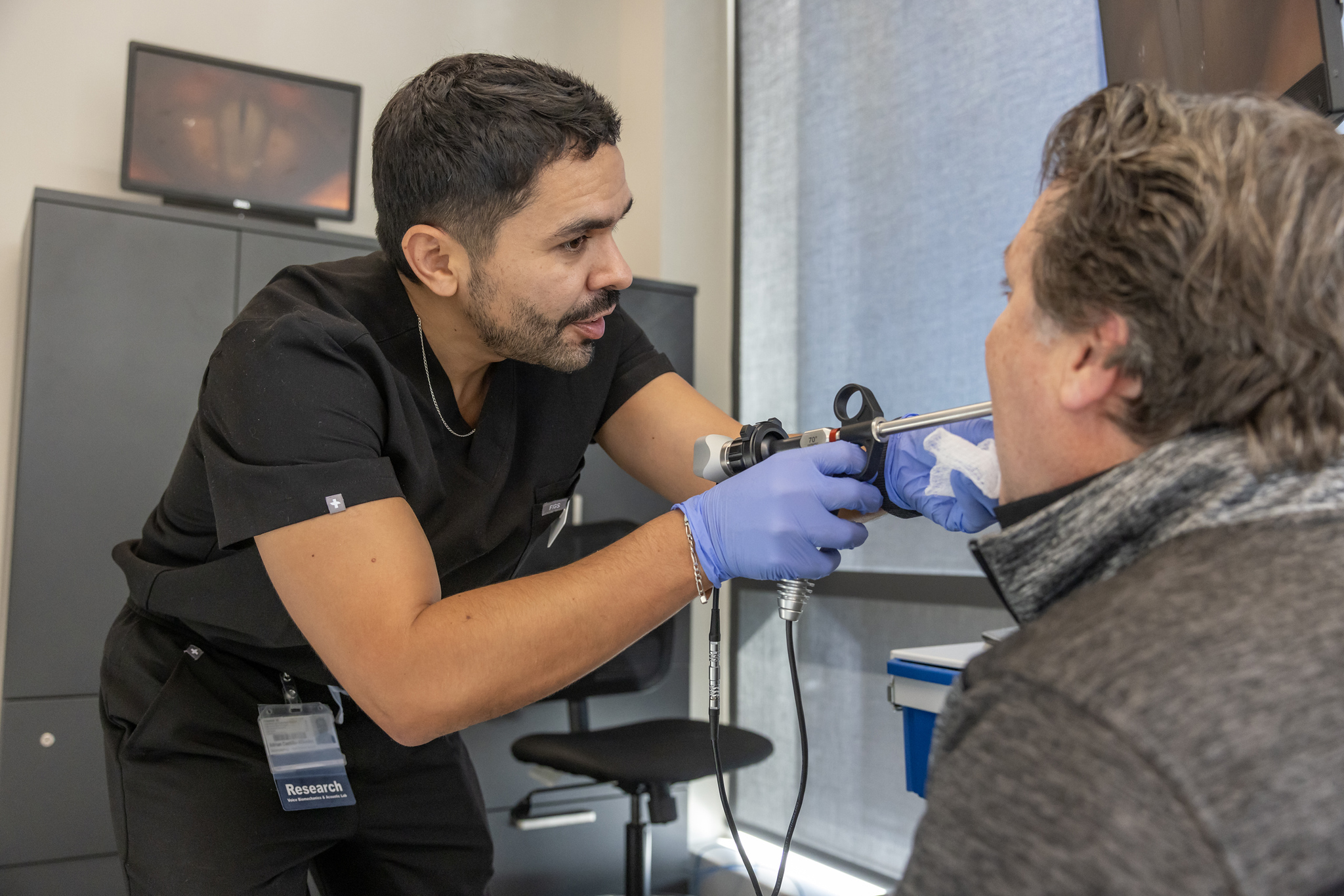
The Voice Biomechanics and Acoustics Lab (VBAL), led by Eric Hunter, PhD, MS, BS and department chair seeks to examine all aspects of the voice mechanism and production. Housed in the Department of Communication Sciences and Disorders (CSD), VBAL brings together top researchers from a variety of disciplines to conduct interdisciplinary, field-advancing research.
VBAL research fellow Adrián Castillo-Allendes Ph.D., M.Sc., SLP, finds that CSD’s research allows for community impact that extends past the research setting, bridging the gap between research precision and clinical reality. “[At Iowa CSD] you are not just learning theory; you are building testing tools that directly impact patient care,” Castillo-Allendes said.
This real-world impact was displayed last December when researchers from V-BAL published “Performance Evaluation Framework for Contact Microphones: A Controlled Laboratory Study for Voice Research” in the Journal of Voice. VBAL researchers aim to make voice monitoring more accessible via the use of inexpensive contact microphones (CMs). Rather than simply testing CMs, the team developed a standardized shaker platform (SSP) to create a standardized benchmarking framework for evaluating how various CMs respond to vibration, which allows researchers and clinicians to systematically evaluate and compare CMs.
Prior to this study, a majority of voice assessment research was conducted in highly controlled, laboratory environments. However, most real-world voice assessments are conducted by clinicians in noisy settings, such as hospitals or clinics. The lack of prior research in everyday contexts inspired VBAL's research—with the team aiming to prove the validity of low-cost CM alternatives that would make vocal assessment more accessible to voice clinicians.
“If we want voice monitoring to be scalable and accessible, we need standardized ways to evaluate the tools we’re using,” Hunter said. “This framework gives the field a practical foundation for making evidence-based decisions about affordable sensor technology.”
Through testing, the SSP developed by VBAL was shown to be highly repeatable, demonstrating itself as a stable testing system for other researchers. Through this testing method, the study found that low-cost CMs were able to exhibit strong sensitivity in the fundamental frequency and first harmonic ranges of the human voice, effectively demonstrating that inexpensive sensors and tools can be highly proficient in everyday settings.
“What excites me most about this work is that it lowers the barrier to high-quality voice assessment,” Hunter said. “If low-cost sensors can perform reliably, we can expand voice monitoring beyond specialized labs into clinics, rural settings, and even occupational environments.”
CSD doctoral student and VBAL research assistant Fernanda Figueroa plans to further develop this research as part of her pre-dissertation project by analyzing other clinically relevant physiological functions like coughing and swallowing. “The department has well-equipped laboratories, opportunities to collaborate with researchers from other disciplines, and amazing mentors that can provide high-level specialized training,” Figueroa said. “With this type of support, the sky is truly the limit.”
In January, VBAL produced a complementary study, “Low-Cost Contact Microphones for Bedside Voice Assessment: Proof of Concept”, in the European Archives of Oto-Rhino-Laryngology. This study examined the CMs behavior in a simulated hospital setting, which demonstrates the translational applicability of these tools in real-world contexts.
By establishing a reproducible evaluation system and demonstrating that some low-cost sensors perform reliably in voice-relevant frequency ranges, the team is building the foundation for scalable airway and laryngeal monitoring—including future applications in bedside care, occupational voice monitoring, and telehealth environments. By continuing to work at the intersection of clinical questions and technological solutions, the team hopes to further expand access to equipment, allowing clinicians and researchers to reach currently underserved populations.
“Cutting-edge research isn’t always about building something more expensive—sometimes it’s about proving that simple tools can work exceptionally well,” Hunter said. “By establishing a standardized way to test contact microphones and demonstrating their sensitivity in clinically meaningful frequency ranges, we’re laying the groundwork for the next generation of voice and airway monitoring.”